Hair Protein Treatment Products: How to Choose and Use
Hair Protein Treatment Products: How to Choose and Use Them
If your hair feels weak, breaks easily, or has become rough after coloring or heat styling, you have probably come across protein treatments as a possible fix. Hair protein treatment products are designed to temporarily strengthen and improve the feel of hair that has become fragile, damaged, or overly processed.
But protein is not automatically the right answer for every hair concern. Some hair types and conditions respond well to protein, while others do better with more moisture and less protein. This guide walks through what these products actually do, how to tell if your hair could use one, the different types available, and how to use them without overdoing it.
What Are Hair Protein Treatment Products?
Hair protein treatment products are formulas — masks, conditioners, sprays, or intensive treatments — that contain protein ingredients meant to interact with the hair shaft. Hair is naturally made largely of a protein called keratin, and damage from bleaching, coloring, chemical straightening, or repeated heat styling can wear away parts of this structure.
Most protein treatments use hydrolyzed proteins, meaning the protein molecules have been broken down into smaller pieces that can settle into these worn or damaged areas of the strand. This can temporarily make hair feel firmer, smoother, and less prone to snapping.
It’s worth being clear about what these products can and cannot do. They can improve the feel and appearance of damaged hair for a period of time. They cannot permanently rebuild hair that has already been structurally damaged, since hair is not a living tissue that repairs itself the way skin does. Results are temporary and depend heavily on how damaged the hair already is.
How Do Protein Treatments Work on Hair?
Protein treatments generally rely on a handful of common ingredient types:
- Hydrolyzed keratin — closely matches hair’s own natural protein
- Hydrolyzed wheat protein — often used for lightweight strengthening
- Hydrolyzed silk protein — known for adding smoothness and shine
- Hydrolyzed rice protein — a lighter option, often used in gentler formulas
- Amino acids — the smaller building blocks that make up proteins, often found in leave-in products
- Collagen-derived ingredients — sometimes included for added smoothing effects
These ingredients work by temporarily coating or filling in gaps along the hair shaft. This is a surface-level, cosmetic improvement rather than a structural rebuild. Think of it as similar to spackling small cracks rather than replacing the wall itself — it improves how the hair looks and feels, but it does not undo the underlying damage.
Who Can Benefit From a Protein Hair Treatment?
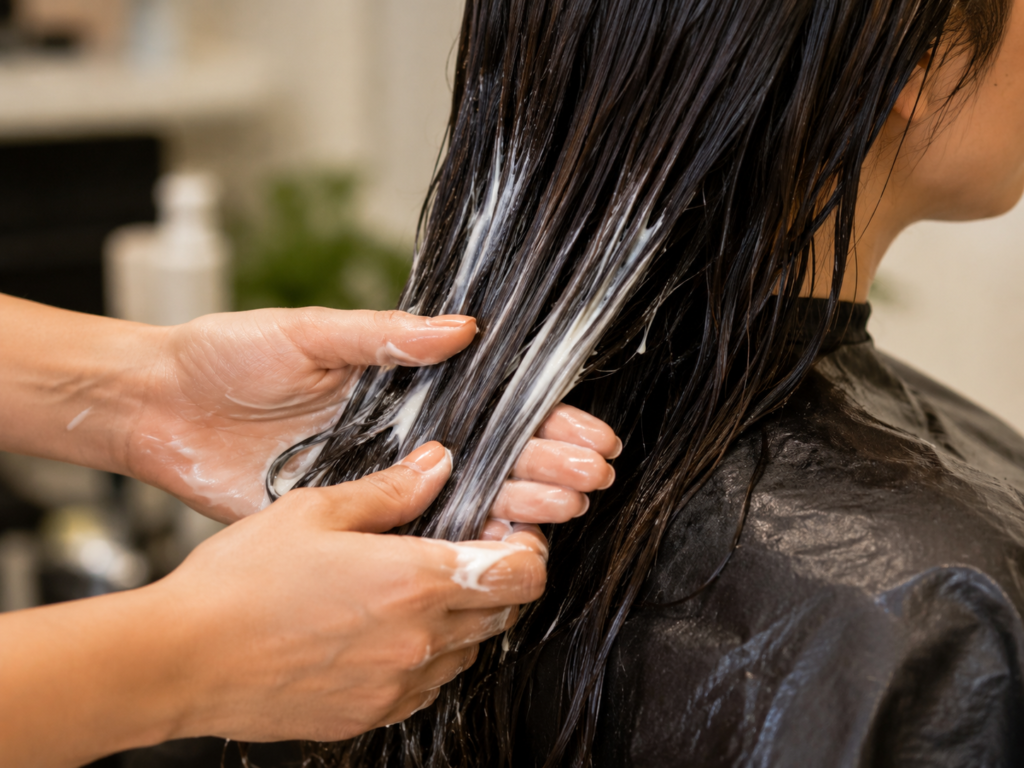
Protein treatments tend to be most useful for:
- Hair that breaks easily or snaps when styled
- Chemically treated hair, including relaxed or straightened hair
- Bleached or frequently colored hair
- Heat-damaged hair from frequent styling tools
- Overprocessed hair in general
- Weak or fragile strands that don’t hold styles well
- Some curly and textured hair types that respond well to added protein
On the other hand, hair that is healthy, rarely processed, and already feels strong may not need regular protein treatments. Adding protein to hair that doesn’t need it can sometimes do more harm than good, which is covered further below.
Signs Your Hair May Need Protein
A few common signs people associate with needing protein include:
- Excessive breakage, especially when brushing or styling
- Hair that feels unusually weak or thin
- Loss of elasticity — hair that doesn’t stretch and bounce back normally when wet
- Hair that becomes difficult to style or hold a shape
- Noticeable damage after bleaching or other chemical processing
That said, these signs alone don’t confirm a protein deficiency. Dryness and protein deficiency are not the same thing, and dry hair can show some of the same symptoms. If you’re unsure, it often helps to try a light protein treatment first and see how your hair responds, rather than assuming protein is the fix.
Types of Hair Protein Treatment Products
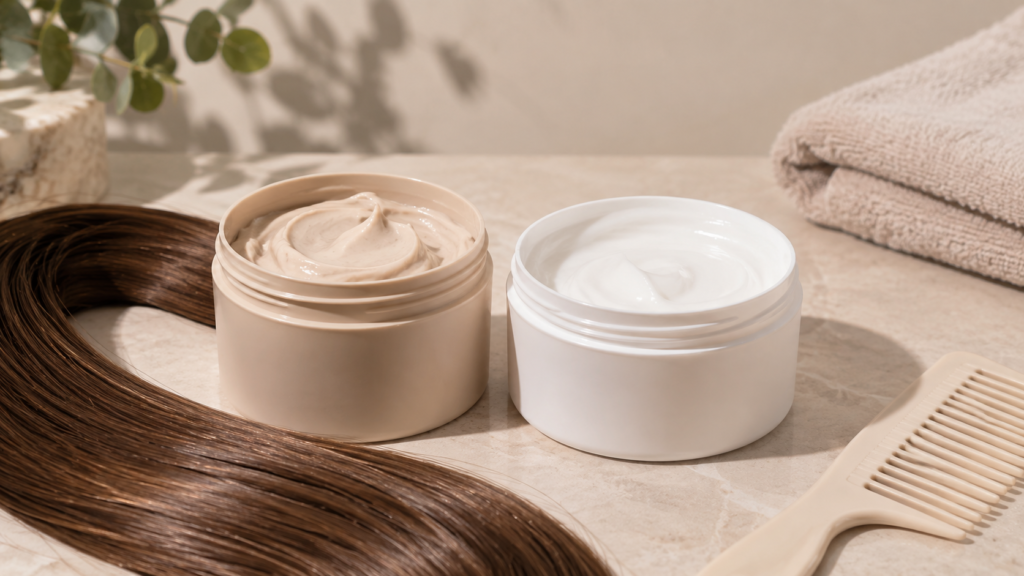
| Product Type | Best For | Strength | Typical Use |
|---|---|---|---|
| Protein Shampoo | Mild support | Low | Regular/occasional |
| Protein Conditioner | Light strengthening | Low–Medium | Regular/occasional |
| Protein Hair Mask | Damaged or weak hair | Medium | Weekly/occasional |
| Intensive Protein Treatment | Severely damaged hair | High | Infrequent |
| Leave-In Protein Treatment | Ongoing light support | Low–Medium | As directed |
These frequencies are general starting points, not universal rules. Always follow the specific product’s instructions and pay attention to how your hair responds, since formulations vary in strength even within the same category.
How to Choose Hair Protein Treatment Products
Hair type. Straight, wavy, curly, and coily hair can all respond differently to protein. Curly and coily hair often tolerates protein well but can also become stiff if overused. Fine, straight hair tends to be more sensitive to strong protein formulas.
Hair condition. Healthy hair generally needs less protein than dry, damaged, bleached, colored, chemically treated, or breakage-prone hair. Matching the product to your actual condition matters more than following trends.
Protein strength. Light protein products, like some conditioners and leave-ins, are meant for ongoing gentle support. Intensive treatments are formulated for more significant damage and are usually meant to be used less often.
Product formula. Check the ingredient list for the type of protein used and where it falls relative to water and conditioning agents — this can give you a sense of how concentrated the protein content is.
Moisture balance. Protein works best when balanced with conditioning and moisturizing care. Relying on protein alone, without any moisture, often leads to hair that feels stiff rather than strong.
Protein Treatment vs Moisturizing Treatment
| Feature | Protein Treatment | Moisturizing Treatment |
|---|---|---|
| Main purpose | Strength/support | Softness and hydration |
| Useful for | Weak or damaged-feeling hair | Dry or rough-feeling hair |
| Main focus | Protein/amino-acid ingredients | Conditioning/humectant ingredients |
| Frequency | Depends on hair and product | Often more frequent |
| Overuse concern | Can make hair feel stiff or brittle | Can leave hair heavy depending on formula |
Most hair benefits from both types of care rather than relying exclusively on one. If your routine only ever includes protein, or only ever includes moisture, that imbalance is often what leads to hair feeling either stiff or limp.
How to Use a Protein Hair Treatment
- Wash or cleanse your hair according to the product’s directions.
- Remove excess water so hair is damp, not soaking wet.
- Apply the recommended amount of product — more is not necessarily better.
- Distribute it evenly through the lengths, focusing on areas that feel most damaged.
- Follow the product’s specified processing time exactly.
- Rinse thoroughly if the product requires rinsing.
- Follow with a conditioner if the instructions recommend it.
- Style gently afterward and minimize unnecessary heat where possible.
Processing times and application methods vary significantly between products, so always follow the specific label rather than a general routine.
How Often Should You Use Protein Treatment?
There’s no single frequency that works for everyone. How often you should use a protein treatment depends on:
- How damaged your hair currently is
- Your hair’s texture and porosity
- Whether your hair has been chemically treated
- The strength of the specific product
- How your hair responds after each use
- Whether it’s a rinse-out treatment or a leave-in product
As a general pattern, stronger, intensive treatments need more careful and less frequent use, while mild protein-containing conditioners can usually be worked into a regular routine without much concern. Adjusting based on how your hair actually feels is more reliable than sticking to a fixed calendar.
Signs You May Be Overusing Protein
If protein is being used too often or in too strong a formula, hair can start to show signs such as:
- Feeling stiff or hard to the touch
- Rough texture that wasn’t there before
- Reduced softness overall
- Increased tangling
- Hair feeling less flexible or bouncy
- In some cases, more breakage rather than less
If you notice these signs, a few practical steps can help: pause intensive protein treatments, shift focus to conditioning and moisture for a few washes, reduce how often you use protein products, and reassess whether your hair actually needs protein at all. Not every case of dryness or breakage is caused by protein overload, so it’s worth ruling out other factors like heat damage or product buildup as well.
Common Mistakes to Avoid
- Using strong protein treatments more often than your hair needs
- Assuming protein and moisture do the same job
- Ignoring the specific instructions on the product
- Choosing a product just because it lists keratin, without checking overall formulation
- Using several strong protein products at the same time
- Applying more product than necessary
- Expecting a permanent fix rather than a temporary improvement
- Continuing heat or chemical styling without adjusting for existing damage
Are Hair Protein Treatment Products Safe?
Most cosmetic hair protein products are intended for external use on the hair and scalp and are generally considered safe when used according to their labels. A few general precautions apply:
- Patch testing can be useful, especially with new or strong formulas
- Avoid contact with the eyes during application
- Follow the product’s specific instructions for amount and timing
- Stop use if you notice irritation and consult a professional if it persists
- Be extra cautious with professional in-salon chemical or keratin-smoothing treatments, since formulations and application processes can differ significantly from at-home products
This article is not medical advice, and any ongoing scalp irritation or hair concerns are worth discussing with a dermatologist or professional stylist.
How to Build a Simple Protein + Moisture Hair Routine
A basic routine that balances both protein and moisture might look like this:
Step 1: Gentle cleansing — using a shampoo suited to your hair type. Step 2: Conditioning — restoring softness after cleansing. Step 3: Protein treatment when appropriate — used based on your hair’s condition, not on a fixed schedule. Step 4: Moisturizing or conditioning care — following protein treatments to maintain balance. Step 5: Leave-in or styling product if needed — for daily manageability. Step 6: Limit unnecessary heat and mechanical stress — to reduce the damage that makes protein treatments necessary in the first place.
The exact routine should be adjusted based on your hair’s condition and whatever the specific products you’re using recommend.
Frequently Asked Questions
What are the best hair protein treatment products?
The best product depends on your hair’s condition rather than one universal option. Lightweight protein conditioners suit mild support, while intensive treatments are better suited to more significantly damaged hair.
How do I know if my hair needs a protein treatment?
Signs like excessive breakage, weak strands, or reduced elasticity can suggest a need for protein, but these signs can also stem from dryness or other causes. Trying a light treatment and watching how your hair responds is a practical way to check.
Can protein treatments help damaged hair?
Yes, protein treatments can temporarily improve the strength and feel of damaged hair by filling gaps in the hair shaft. They do not permanently repair the underlying structural damage.
How often should I use a protein treatment?
It depends on your hair’s condition, texture, and the strength of the product. Stronger treatments are generally used less often, while mild protein conditioners can be used more regularly.
Can I use protein and moisturizing treatments together?
Yes, and most hair benefits from a balance of both. Relying only on protein or only on moisture often leads to hair that feels either stiff or overly soft.
Can protein treatments make hair dry?
Yes, overusing protein, especially strong formulas, can leave hair feeling stiff, rough, or dry. This is often described as protein overload and usually improves once moisture is reintroduced and protein use is reduced.
Is a protein hair mask better than a protein conditioner?
Neither is universally better — a protein mask is typically stronger and suited to more damaged hair, while a protein conditioner offers lighter, more frequent support. The right choice depends on your hair’s condition.
Can curly hair use protein treatments?
Yes, many curly and textured hair types respond well to protein, since curl patterns can be more prone to damage and dryness. However, curly hair can also be sensitive to overuse, so moderation still matters.