Hair Protein Mask: Benefits, Uses, and How to Choose One
Hair Protein Mask: Benefits, How to Use It, and Who Needs It
A hair protein mask is a treatment designed to temporarily fill gaps in the hair shaft caused by damage, heat styling, or chemical processing. Many people turn to protein treatments when their hair feels weak, breaks easily, or has a rough, straw-like texture. Unlike a regular moisturizing mask, a protein mask focuses on strengthening the hair’s structure rather than simply adding softness.
This article explains what a hair protein mask actually does, how it differs from a moisturizing treatment, and how to tell if your hair could benefit from one. You will also learn how to use a protein mask correctly, how often to use it, what protein overload looks like, and how to choose a product that suits your hair type. The goal is practical, realistic guidance you can actually use, not exaggerated promises.
What Is a Hair Protein Mask?
A hair protein mask is a treatment formulated with proteins, usually hydrolyzed proteins, that are small enough to temporarily bond with the hair shaft. Hair itself is made mostly of a protein called keratin, and damage from heat, coloring, or chemical treatments can wear away parts of this structure, leaving gaps along the strand.
When you apply a protein mask, the proteins in the formula settle into these gaps. This can make the hair feel firmer, smoother, and less prone to breakage while the treatment is active. It is important to understand that this effect is temporary and cosmetic rather than a permanent structural repair.
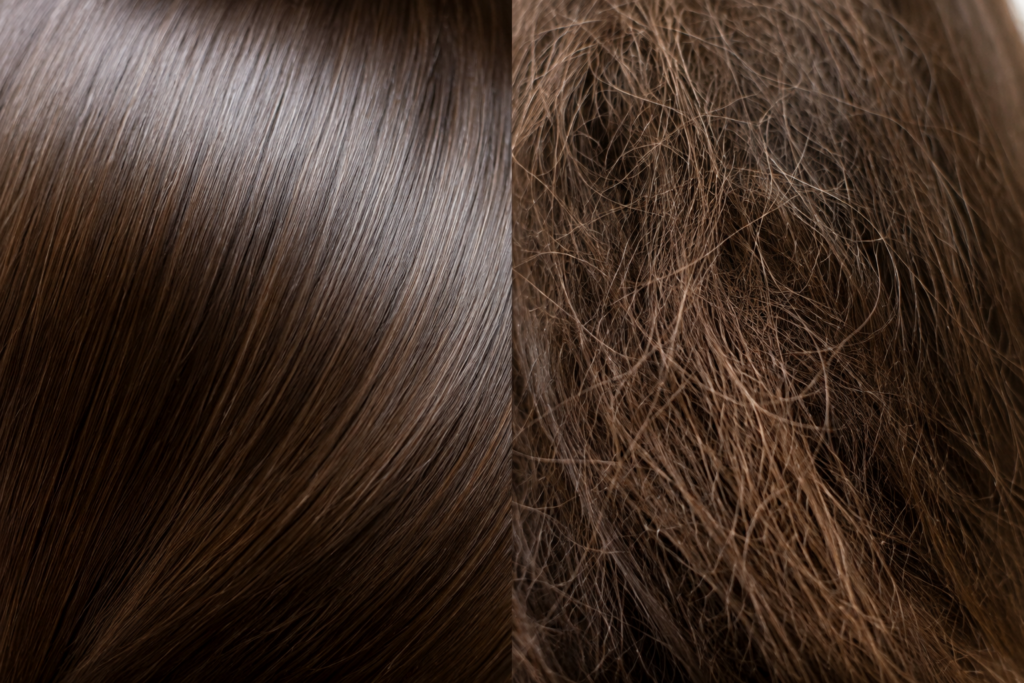
A protein mask is different from a regular moisturizing hair mask. A moisturizing mask focuses on hydration, using ingredients that add softness and flexibility to the hair. A protein mask focuses on strength and structure. Hair that only receives moisture without any protein can start to feel limp or overly soft over time, especially if it is already damaged.
Benefits of a Hair Protein Mask
The realistic benefits of a hair protein treatment depend heavily on your hair’s condition and type. In general, a protein mask may:
- Help improve the feel of damaged or over-processed hair
- Support strands so they feel firmer and more resilient
- Reduce the appearance of breakage along the length of the hair
- Improve rough or straw-like texture
- Make hair feel smoother to the touch
- Improve day-to-day manageability, such as easier detangling
- Be useful after heat styling or chemical treatments like coloring or straightening
These benefits are cosmetic and temporary. A protein mask does not permanently repair hair, and results vary based on how damaged the hair is, its natural texture, and how the individual strands respond to protein.
Does Your Hair Need Protein?
Not every hair concern calls for a protein treatment. Here are some signs that may indicate your hair could benefit from one:
- Hair feels noticeably weak or fragile
- You are seeing more breakage than usual
- Hair feels overly soft, mushy, or limp when wet
- Hair has been chemically treated, bleached, or heat-styled often
- Hair does not hold curls, blowouts, or styles well
- Hair feels rough or straw-like after repeated heat or chemical exposure
That said, these signs are not exclusive to protein deficiency. Dryness, product buildup, or simply needing a trim can cause similar symptoms. If you are unsure, it can help to introduce a protein treatment gradually and observe how your hair responds rather than assuming protein is the answer right away.
Hair Protein Mask vs. Moisturizing Hair Mask
| Feature | Protein Mask | Moisturizing Mask |
|---|---|---|
| Main purpose | Temporarily strengthens and fills gaps in damaged hair | Adds hydration and softness |
| Best for | Weak, breaking, or chemically damaged hair | Dry, dull, or coarse hair lacking moisture |
| Hair feel | Firmer, more resilient | Softer, more flexible |
| Typical use | Occasional, based on hair condition | More frequent, as part of regular care |
| Possible problem with overuse | Stiffness, dryness, protein overload | Limpness, reduced hold, over-softened strands |
Most healthy hair benefits from a balance of both protein and moisture rather than relying on one alone. Too much protein without enough moisture can leave hair feeling stiff, while too much moisture without any protein can leave it feeling weak and limp.
How to Use a Hair Protein Mask
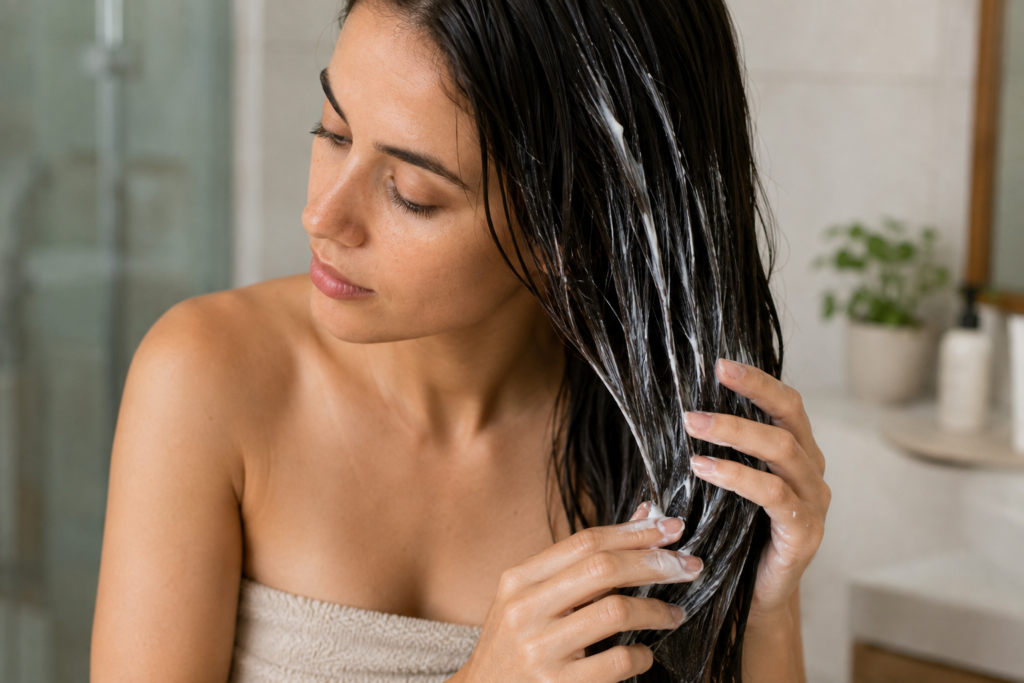
- Wash your hair according to the product’s instructions, since some protein masks are meant for clean hair and others for damp, unwashed hair.
- Gently remove excess water so the hair is damp rather than dripping.
- Apply the mask mainly to the mid-lengths and ends, unless the product specifically says to apply it to the scalp as well.
- Distribute the product evenly using your fingers or a wide-tooth comb.
- Leave it on for the time specified on the packaging. Do not extend this time in hopes of better results.
- Rinse thoroughly, following any specific rinsing instructions, such as using cool water.
- Follow with a conditioner if the product instructions recommend it, since this can help balance protein with moisture.
- Let your hair dry gently, avoiding excessive heat right after treatment if possible.
Product instructions should always take priority over general guidance, since protein masks vary widely in strength and formulation.
How Often Should You Use a Hair Protein Mask?
There is no single schedule that works for everyone. How often you should use a protein mask depends on:
- The current condition of your hair
- Your hair type and thickness
- The level of chemical or heat damage
- The strength of the specific product
- How your hair responds after each use
As a general guide, lightly damaged or healthy hair may only need occasional maintenance treatments, while more heavily damaged hair might benefit from more frequent use for a period of time, followed by less frequent maintenance. Intensive protein treatments are typically stronger and meant to be used less often than lighter protein-infused conditioners. Watching how your hair feels after each application is more reliable than following a fixed schedule.
Can You Use a Protein Mask on Dry or Curly Hair?
Different hair types respond to protein differently, so it helps to consider your specific hair before starting a protein routine.
Curly and wavy hair often benefits from protein because curl patterns can be more prone to dryness and damage, but curly hair can also be more sensitive to protein overload if used too often.
Straight hair may need protein primarily after heat styling or chemical treatments, since undamaged straight hair sometimes has less need for frequent protein use.
Fine hair can be more sensitive to protein and may feel stiff or straw-like if a strong treatment is used too often, so lighter formulas are usually preferable.
Thick hair can often tolerate protein well, though results still depend on how damaged or porous the hair is.
Color-treated and chemically treated hair frequently benefits from protein because chemical processes weaken the hair’s structure, but the strength and frequency of treatment should match the level of damage.
No single approach works identically for every hair type, so it is worth adjusting based on how your own hair responds.
What Is Protein Overload?
Protein overload happens when hair receives more protein than it can absorb or balance with moisture, leading to a stiff, straw-like feel. Common signs include:
- Hair feels unusually stiff or hard
- Hair feels rough rather than smooth
- Increased tangling or difficulty detangling
- Hair loses its natural softness
- Hair becomes harder to style or manage
Not every instance of dry or rough hair is protein overload. Environmental factors, product buildup, or simply needing more moisture can cause similar symptoms. If you suspect protein overload, a practical first step is to pause protein treatments and focus on moisturizing products for a few washes, then reassess how your hair feels. Clarifying shampoos are sometimes used to help remove buildup, but should be used according to their own instructions.
Common Mistakes When Using a Hair Protein Mask
- Using the mask more often than the hair actually needs
- Leaving the product on longer than the instructions specify
- Applying too much product at once
- Ignoring the specific instructions that come with the product
- Layering multiple strong protein treatments together
- Assuming protein treatments replace the need for moisture
- Continuing to use protein despite noticing stiffness or increased breakage
Paying attention to how your hair responds after each use is one of the simplest ways to avoid these mistakes.
DIY Hair Protein Masks: Are They Worth Trying?
Homemade hair treatments using kitchen ingredients are popular, largely because they feel natural and low-cost. However, ingredients like eggs, yogurt, or gelatin are not formulated the same way as professional protein treatments, and their effects on hair are not consistent or well-verified.
Professionally formulated protein masks typically use hydrolyzed proteins that are processed to a molecular size capable of interacting with the hair shaft in a predictable way. Food-based ingredients do not necessarily offer the same benefit, and results can vary widely from person to person. If you enjoy experimenting with DIY treatments, it is reasonable to try them as a supplement, but they should not be treated as a guaranteed substitute for a formulated protein product, especially for significantly damaged hair.
How to Choose the Right Hair Protein Mask
When looking at a product label, you may see several types of protein-related ingredients, including:
- Hydrolyzed proteins (broken down into smaller molecules for better penetration)
- Keratin (matches the hair’s natural protein structure)
- Amino acids (the building blocks of proteins)
- Wheat protein
- Silk protein
- Rice protein
The presence of these ingredients alone does not guarantee a product is right for your hair. Consider your hair’s current condition, how sensitive it tends to be to protein, and the overall strength of the formula. A lighter, protein-infused conditioner may suit fine or protein-sensitive hair, while a more intensive treatment may be appropriate for heavily damaged or chemically treated hair. Paying attention to how your hair responds after use is the most reliable way to know if a product is working for you.
Final Thoughts
A hair protein mask can be a useful tool for hair that feels weak, damaged, or over-processed, helping it feel stronger and smoother in the short term. It is not a permanent fix, and it works best as part of a routine that also includes moisture. Rather than following a rigid schedule, pay attention to how your hair responds after each treatment, and adjust frequency and strength accordingly. If you experience persistent breakage, scalp issues, or hair changes that do not improve with adjustments to your routine, it may be worth consulting a professional stylist or dermatologist for a proper evaluation.
FAQ
What does a hair protein mask do?
A hair protein mask temporarily fills gaps in the hair shaft caused by damage, making strands feel firmer, smoother, and less prone to breakage. The effect is cosmetic and short-term rather than a permanent structural repair, and results depend on your hair’s condition.
How often should you use a hair protein mask?
There is no single answer, since it depends on your hair type, condition, and how it responds to protein. Lightly damaged hair may only need occasional treatments, while more damaged hair might need more frequent use initially, followed by less frequent maintenance.
Is a protein mask good for damaged hair?
Yes, protein masks are often used on damaged or chemically treated hair because they can temporarily improve strength and texture. However, they should be paired with moisture and used according to product instructions to avoid overuse.
Can a hair protein mask make hair dry?
Yes, if used too often or without enough moisture, a protein mask can make hair feel stiff, rough, or dry. This is known as protein overload, and it usually improves once protein use is reduced and moisture is reintroduced.
How do you know if your hair needs protein?
Signs may include weak or breaking strands, hair that feels overly soft or limp, or rough texture after heat or chemical styling. These signs can also have other causes, so it helps to introduce protein gradually and observe how your hair responds.