
Homemade Protein Treatment for Curly Hair: At-Home Guide
Your curls look great some days and completely fall flat on others. Maybe your hair feels stretchy and limp when it’s wet, or your curl pattern seems to be loosening up even though you haven’t changed a thing about your routine. This kind of shift often leads people to search for a homemade protein treatment for curly hair, hoping it’s the missing piece.
Sometimes it is. Curly hair can lose some of its structure over time, especially with heat styling, coloring, or just general wear. But protein isn’t automatically the fix for every curl problem, and using it when your hair actually needs moisture can leave you more frustrated than when you started.
This guide walks through how to tell what your curls actually need, which homemade ingredients can help, and how to use a protein treatment without overdoing it.
What Does Protein Do for Curly Hair?
Hair is built mostly from a protein called keratin, which forms the structural framework of each strand. You can think of it as the internal support system that gives hair its strength and shape.
When curly hair goes through heat styling, coloring, or general daily wear, tiny gaps can form along the outer layer of the strand, known as the cuticle. This is often what makes curls feel weak, look less defined, or stretch out more than usual when wet.
A protein-containing treatment can temporarily fill in some of these gaps, which may help curls feel firmer and hold their shape a bit better. That said, protein is not automatically good for every curly-haired person. Fine, low-porosity curls, or hair that hasn’t had much recent damage, often do better with less protein and more focus on moisture.
Strengthening and moisturizing are two different jobs. Protein reinforces structure, while moisture adds softness and flexibility. Curly hair usually needs a mix of both, and figuring out which one your hair is asking for at any given time makes a real difference.
How to Tell If Your Curly Hair May Need Protein
A few common signs can point toward protein being worth trying:
- Excessive stretching when wet, where curls feel gummy and don’t spring back
- Curls losing definition, even with your usual styling products
- Hair feeling unusually weak, especially compared to how it normally feels
- Difficulty holding a curl pattern, with styles falling flat quickly
- Increased breakage, particularly snapping rather than gradual shedding
It’s worth being clear that these signs can have more than one cause. Product buildup, dryness, humidity, or simply needing a trim can all create similar symptoms. Noticing one or two of these on their own isn’t necessarily a sign that your hair needs protein specifically.
Protein vs. Moisture: What Does Your Curly Hair Need?
Since protein and moisture problems can look similar on the surface, this table breaks down which one tends to fit which symptom.
| Sign | Protein may help | Moisture may help |
|---|---|---|
| Hair feels weak | Yes, especially if hair is also stretchy or elastic | Sometimes, if weakness comes with dryness |
| Hair feels dry | Rarely on its own | Yes, dryness usually points to a moisture need |
| Hair stretches excessively | Yes, this is a common protein-deficiency sign | Not usually the main fix |
| Hair feels stiff | No, stiffness often means too much protein already | Yes, moisture can help soften stiff-feeling hair |
| Curls lose definition | Sometimes, if paired with weakness or breakage | Often, especially if hair also feels dry or rough |
If you’re unsure which column matches your hair, starting with a moisture-focused treatment is usually the safer first step, since moisture deficiency is more common than protein deficiency for most curl types.
Homemade Protein Treatment Ingredients
Not every kitchen ingredient works the same way on hair. Here’s an honest look at three common options.
Egg Eggs contain natural protein that can offer mild strengthening when applied to hair. They tend to work well for people who want a gentle introduction to protein without anything too intense. A possible drawback is the need to rinse with cool water, since hot water can cause the egg to cook in your hair. To use it safely, whisk it well and always do a full rinse before shampooing.
Plain Yogurt Yogurt offers a milder protein source along with some natural conditioning, making it a good option for curls that lean more toward dryness. It’s generally well tolerated and easy to work with. A possible drawback is that its protein content is lighter than other options, so it may not be strong enough for significantly damaged hair. Apply it to clean, damp hair and rinse thoroughly afterward.
Gelatin Gelatin is made from hydrolyzed collagen, which makes it one of the more direct protein sources available for a DIY treatment. It can be useful for curls that need a bit more reinforcement than egg or yogurt alone provide. A possible drawback is that it needs to be fully dissolved in warm water first, or it can leave a gritty texture in hair. Stir it into warm water until smooth before mixing with other ingredients.
It’s worth being upfront here: these homemade ingredients may condition hair and temporarily improve how it feels and behaves, but they are not scientifically proven hair-repair treatments in the way professionally formulated products are tested to be. They can support manageability, not permanently repair damaged strands.
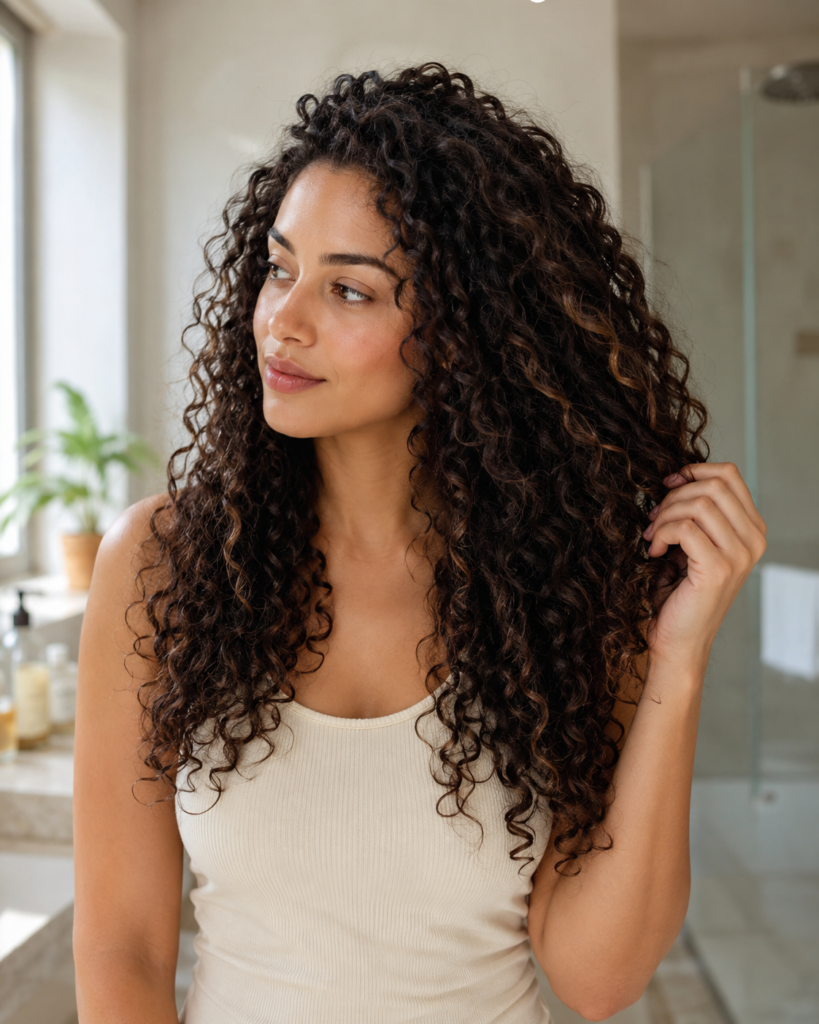
Easy Homemade Protein Treatment for Curly Hair
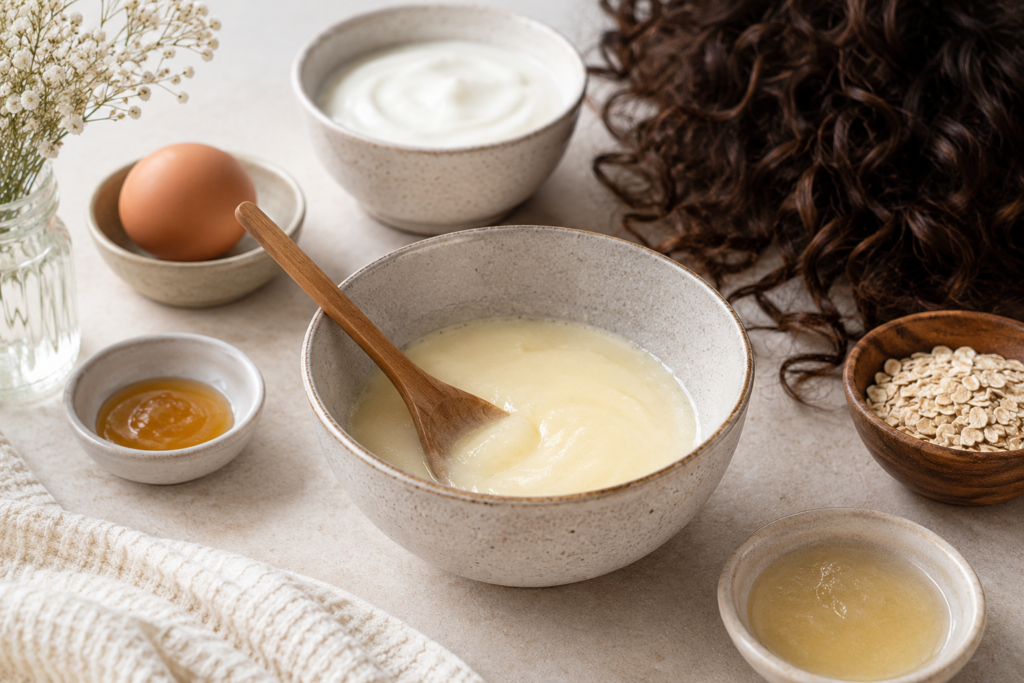
This is a simple, beginner-friendly recipe that combines gelatin as the main protein source with yogurt and honey for conditioning.
Ingredients
- 1 tablespoon unflavored gelatin powder
- 1 cup warm water
- 2 tablespoons plain yogurt
- 1 teaspoon honey
How to Make It
- Sprinkle the gelatin into the warm water and stir until it’s fully dissolved, with no clumps remaining.
- Add the yogurt and honey, stirring until the mixture is smooth and easy to spread.
- Let the mixture sit for a minute or two to thicken slightly before applying.
How to Apply It
- Start with clean, damp hair. Damp hair allows the mixture to spread more evenly than dry hair does.
- Divide hair into manageable sections, using clips to keep curls organized as you work.
- Apply evenly, working the mixture through each section from mid-lengths to ends.
- Avoid rough handling. Use your fingers or a wide-tooth comb, and don’t tug through knots.
- Follow the recommended processing time below rather than guessing.
- Rinse thoroughly with cool to lukewarm water until no residue remains.
- Follow with a moisturizing conditioner if needed, especially if your curls feel firm after rinsing.
How Long Should You Leave a Homemade Protein Treatment On?
For a simple recipe like the one above, 15 to 20 minutes is generally a reasonable range. This gives the protein enough time to work without over-processing your curls.
Longer isn’t automatically better. Leaving a homemade mixture on for hours, or overnight, doesn’t make it more effective, and it increases the chances of the treatment drying out or becoming difficult to rinse out fully.
How Often Should You Do a Protein Treatment on Curly Hair?
There’s no single frequency that works for everyone. How often your curls can handle a protein treatment depends on several things:
- Hair condition, since more damaged hair generally tolerates protein more often
- Chemical processing, such as color or bleach, which can increase protein needs
- Heat styling frequency, since more heat use tends to mean more protein loss over time
- Porosity, with higher-porosity hair often responding more noticeably to protein
- Existing hair products, since some conditioners and stylers already include protein
- Individual response, which is really the most reliable guide of all
For beginners, a conservative approach works best: try a protein treatment once, then wait several weeks and watch how your curls respond before repeating it. Once every four to six weeks is a reasonable starting point for most curl types, though this can shift based on how your hair reacts.
What If Your Hair Feels Hard or Dry After Protein?
Sometimes curls end up feeling stiff, rough, or drier than before after a protein treatment. This usually points to one of two things: too much protein, or a treatment that wasn’t the right match for your hair’s current needs.
Signs to watch for include:
- Stiffness that doesn’t soften with your usual products
- A rougher texture than normal
- Increased dryness
- Reduced softness or flexibility in your curls
If this happens, a few practical steps can help:
- Stop the protein treatment temporarily, giving your curls a break for a few weeks
- Focus on gentle cleansing and conditioning, using moisture-rich products without added protein
- Return to protein only when your hair’s condition suggests it may be useful again, rather than on a fixed schedule
Who Should Avoid Homemade Protein Treatments?
A homemade protein treatment isn’t the right fit for everyone. Consider skipping or modifying one if you fall into any of these groups:
- People with known ingredient allergies, particularly to eggs or dairy
- Very sensitive scalps, which may react to unfamiliar ingredients
- Hair that is already extremely dry or brittle, which often needs moisture first, not protein
- Anyone who experiences irritation, whether that’s itching, redness, or discomfort during or after use
If you’re trying an ingredient for the first time, a small patch test on your skin, or a strand test on a small section of hair, is a simple way to check for a reaction before committing to a full treatment.
Homemade Protein Treatment Mistakes to Avoid
- Using too much protein too often
- Leaving treatments on longer than recommended
- Applying the treatment to an irritated scalp
- Expecting permanent repair from an occasional DIY treatment
- Ignoring moisture in favor of constant strengthening
- Using harsh or unsuitable ingredients without considering your hair’s actual needs
- Continuing to use protein when hair has already started feeling stiff or dry
Frequently Asked Questions
What is the best homemade protein treatment for curly hair? There’s no single best option, since it depends on how much strengthening your curls actually need. A simple gelatin, yogurt, and honey mixture is a good, beginner-friendly starting point that most curl types tolerate well.
How do I know if my curly hair needs protein? Signs like excessive stretching when wet, curls losing their definition, and increased breakage can point to a protein need, though these signs can also come from dryness or product buildup.
How often should I use a protein treatment on curly hair? A conservative starting point is once every four to six weeks, adjusted based on how your curls respond. Watch for signs of overuse, like stiffness, and space treatments out further if needed.
Is egg good for curly hair as a protein treatment? Egg can offer mild natural protein and works well for a gentle introduction to protein treatments. It should be rinsed with cool water to avoid cooking in your hair, and avoided if you have an egg allergy.
Can too much protein make curly hair dry? Yes, overusing protein can leave curls feeling stiff, rough, or drier than usual. If this happens, it’s best to pause protein treatments and focus on moisture-rich conditioning for a while.
Should I use protein or moisture on curly hair? It depends on your hair’s current symptoms. Stretching and weakness often point toward protein, while dryness and stiffness usually call for moisture. Most curly hair needs a balance of both over time, not just one.
Final Takeaway
A homemade protein treatment for curly hair can genuinely help some curls feel stronger and hold their shape better, especially hair that’s dealt with heat, color, or general wear. That said, not every curl pattern needs frequent protein, and some hair actually does better with less of it.
Start with a mild approach, like the simple recipe above, and pay close attention to how your hair responds afterward. If curls feel stronger and more defined, that’s a good sign. If they feel stiff or rough, ease off and focus on moisture instead. Balancing strengthening care with moisture and gentle handling, rather than leaning heavily on either one, tends to work best for most curly hair over time.